Canal, Freshwater, or Dry Lot? A Newcomer's Guide to Cape Coral
November 4, 2026 · 4 min read
Cape Coral addresses fall into three kinds, and each raises different questions. A local guide for anyone planning a visit or a move to Southwest Florida.
When you picture a move to Cape Coral, what do you imagine when you hear the words "canal home"?
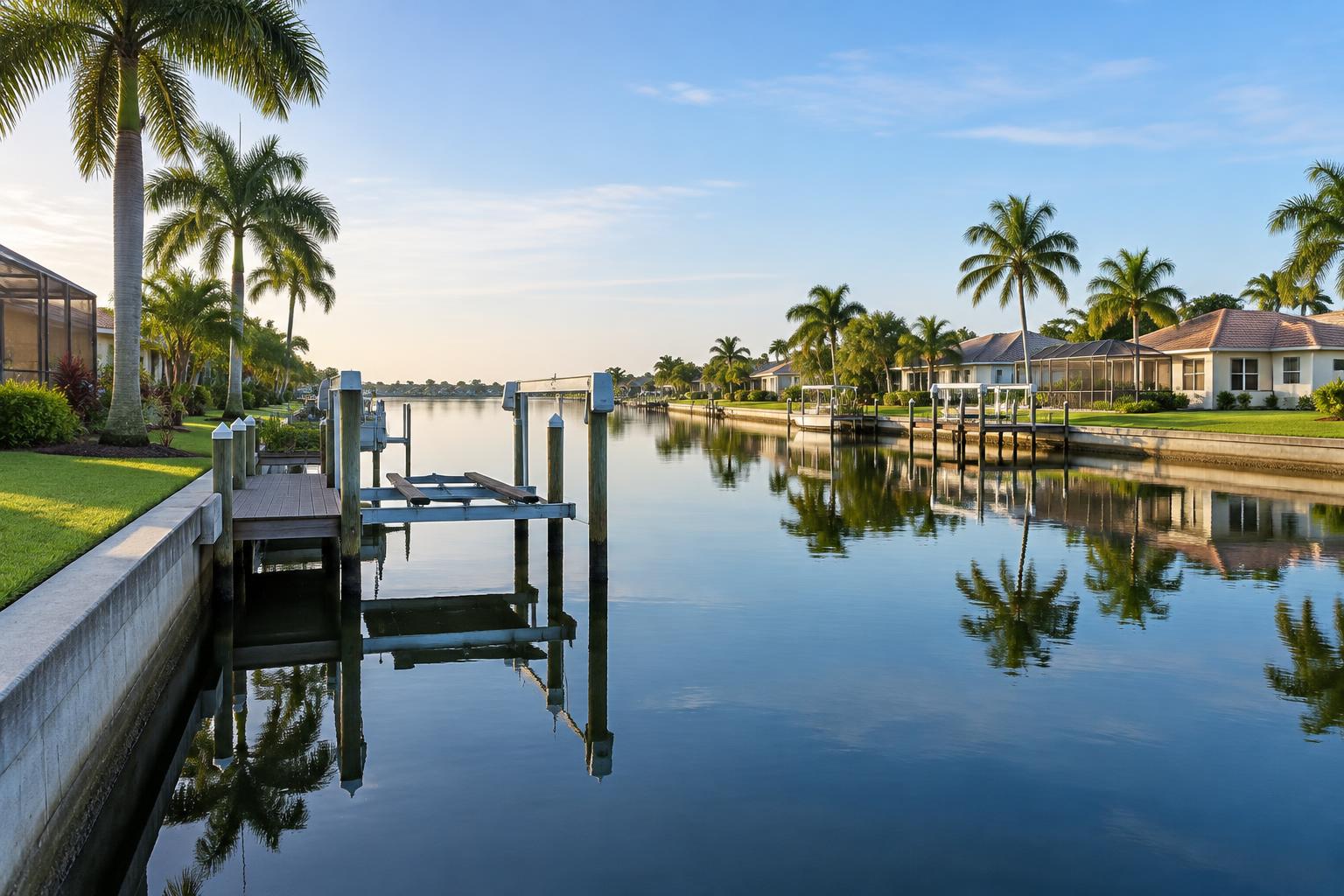
For many people who haven't spent time here, it's a single image: a house, a dock, still water. The reality is more varied, and it helps to know the differences before you start looking. Cape Coral is built around its canals, and where a lot sits relative to the water shapes what daily life is like, what questions are worth asking, and what you'll want to see in person.
Gulf-access canals
A Gulf-access canal is part of a saltwater system that connects to larger waterways. For people who boat, that connection is the point, and it's why they ask how a boat actually gets out from a specific address. The answer is particular to the street and the route, so it's worth asking and learning rather than assuming. For people who don't boat, the appeal can be the view and the feeling of living on the water, and the questions are different: seawall condition, how the lot is oriented, and what the flood zone and insurance look like.
Freshwater canals
Freshwater canals offer water views without a direct boating route to the Gulf. For many people that's an advantage, not a compromise. It can mean a quieter outlook and a different rhythm to the day. What the water can be used for is a question to settle for the particular canal before you rely on it.
The dry lot
Plenty of Cape Coral isn't on a canal at all. A dry lot trades the water view for a different price conversation and a different set of priorities. Because a dry-lot home is compared with other dry-lot homes, its condition, layout and updates carry more weight, and a thoughtful buyer will look closely at all three.
The questions that follow every category
Whichever kind of address you're considering, a handful of questions come right after. What is the flood zone? How old is the roof? Is there wind mitigation documentation? What does an insurance quote look like? These apply to almost every home in Southwest Florida, and the people who ask them early tend to have easier conversations and fewer surprises.
How to find out what you're looking at
If you're looking at homes online from far away, an address can tell you less than you'd like. Look at the lot on a map, ask your agent how the water connects, and ask for the flood zone, the roof age and any wind mitigation paperwork before you plan a trip. It takes an afternoon of questions, and it means the time you spend here is spent on homes that fit what you imagined. It also helps you notice what you value. Some people discover they care most about a water view. Others realize the thing they want is a quiet yard and a short walk to a neighbor's porch.
Why this belongs in a lifestyle piece
I write about this on a lifestyle site because it isn't only a real estate detail. People choose these things for how they want to live: mornings spent looking at water, evenings on a lanai, a quiet street away from it. Understanding the differences helps you describe what you're hoping for, and helps whoever is showing you around understand it too.
Planning a visit or a move
If you're thinking about a trip to see Southwest Florida for yourself, or a move down the road, I'm happy to point you toward the streets and the questions that fit what you have in mind. Message me, and we'll start with what a good day here would look like for you.
What matters most to you: the water, the street, or the space?
General information. Details vary by street and property; verify specifics for any home.
Carleen Murone, REALTOR® (GRI, SRES®) | eXp Realty, LLC SL3531764 | 239-223-9454 | carleen.murone@exprealty.com