Visiting Mom or Dad in Cape Coral for Thanksgiving? What the House Can Tell You
November 25, 2026 · 5 min read
Carleen Murone, REALTOR® (GRI, SRES®) | eXp Realty, LLC
Home for the holidays and noticing something is different at your parent's house? What to look for, how to bring it up kindly, and a free guide: 7 Things to Notice.
Thanksgiving is the week a lot of families come back together under one roof. For many adult children, it's also the first time in a while they've spent more than an afternoon at a parent's house in Southwest Florida.
Phone calls cover a lot. "We're fine." "The weather's beautiful." "Your father's playing golf twice a week." What phone calls don't cover is the house itself, and the house often tells a more complete story.
If you're noticing something is different this year, this is for you.
What you might notice
These are the things families mention to me most often after a holiday visit. None of them is a verdict. Each one is simply information.
The pool. A pool that's a little greener than it used to be, or a pool service that quietly stopped coming, can be a sign that upkeep has become harder to manage.
The mail. A stack on the counter, unopened envelopes, or bills in a pile can mean the paperwork side of the house has become a lot to keep up with.
The yard and the lanai. Overgrown edges, a torn lanai screen nobody has mentioned, patio furniture that hasn't moved in a season.
The rooms that changed purpose. A guest bathroom that became storage. A bedroom nobody goes in anymore. A kitchen where only one corner gets used.
The small fixes. A light that's been out for weeks, a door that sticks, a faucet that drips. Small on their own, but together they can show where the house is asking for more than your parent wants to give.
None of these means anyone has to move. Many people stay in their homes for years with a few changes and the right help in place. The point is to notice while there's still time to choose.
Why the dinner table is the wrong place to bring it up
When you see these things, it's natural to want to say something right away. Please don't do it over the turkey with the whole family listening.
A conversation about someone's home is a conversation about their independence, their memories, and their sense of who they are. In front of an audience it can feel like an ambush, even when it's meant with love. And once a conversation starts badly, it can be hard to restart.
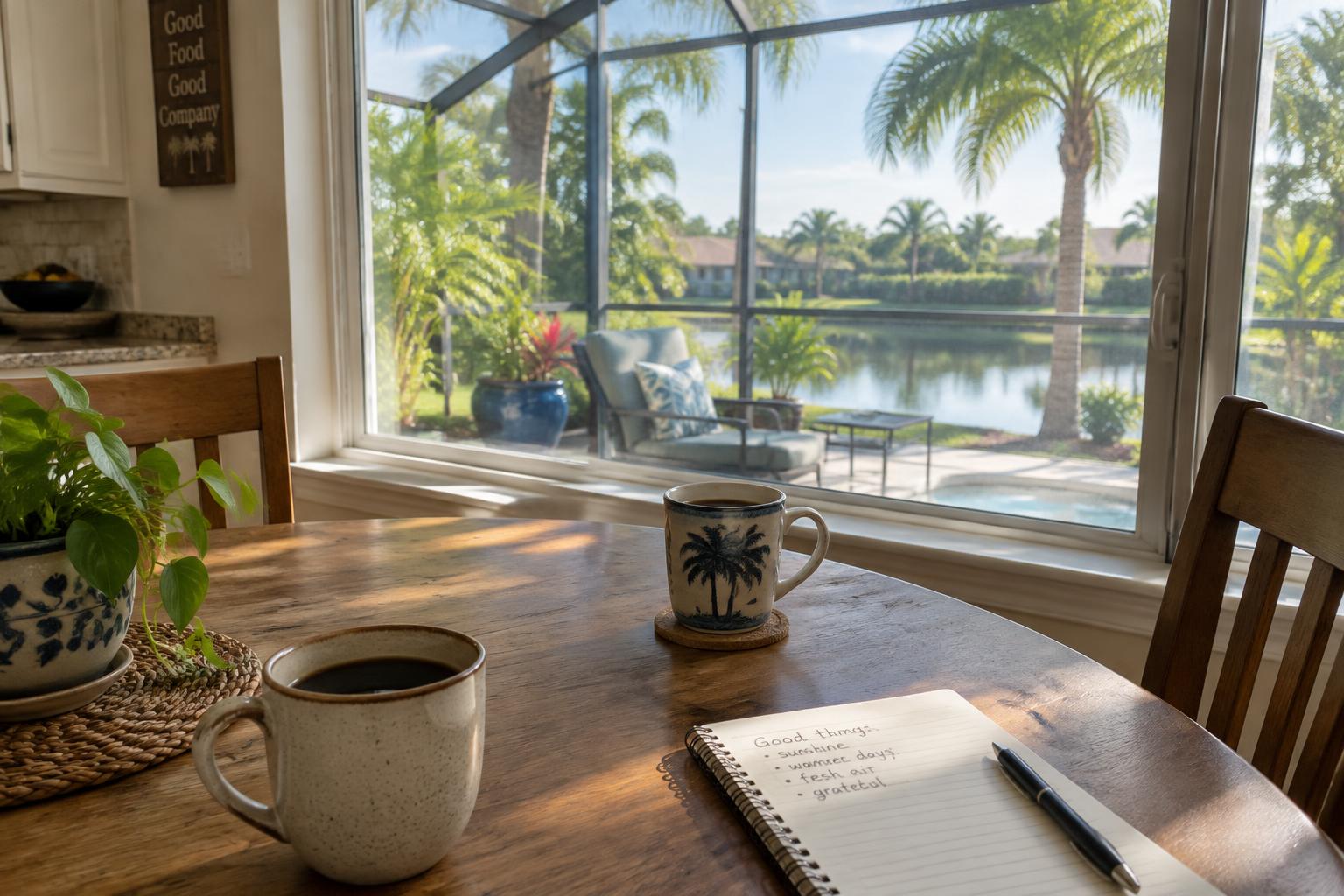
A better approach: notice it, write it down, and wait for a quiet moment, ideally one on one. Maybe a walk, a drive, or a cup of coffee on the lanai the next morning.
Start with a question, not a plan
The families I've seen handle this best open with curiosity rather than a solution. Questions like these keep your parent in the driver's seat:
What's been the hardest part of keeping up with the house lately? Is there anything you'd like help with that you haven't wanted to ask for? When you picture the next few years, where do you see yourself living?
Then listen. You may hear that everything is fine, and that's okay. You may hear something you didn't expect. Either way, you've opened a door that can stay open.
Three directions, not one
When families do start talking about the future, it helps to know there isn't just one path. Most decisions fall into one of three directions: stay, stay with some help and a few changes to the home, or plan a move. Each can be the right answer. What matters is that the decision is made thoughtfully and early, rather than all at once because something unexpected forced it.
That's the heart of Living Well Forward, the planning approach I use with Southwest Florida families: helping people think ahead about their home, lifestyle and independence before a crisis decides for them.
A free guide for this week
I made a short guide for exactly this visit: 7 Things to Notice at Your Parent's House. It walks through the mail, the pool and yard, the lanai and small repairs, the kitchen, the bathroom, the walkways and lighting, and who checks on the house. For each one, it covers what you might see, why it matters, and one gentle question to ask later. There's space at the end to write down what you noticed.
Get it free at livingwellinswfl.com/7-things-to-notice, or reply NOTICE to any of my posts and I'll send it to you. When you're ready for the bigger questions, my Stay or Move Now guide and a Living Well Forward planning conversation are the next steps, in person or by phone if you live out of state.
And if a parent has already moved to assisted living and the question is what to do with the house, my article on selling a parent's Cape Coral home walks through what to decide first.
What's one thing at the house you'd want to ask about, but haven't?
Carleen Murone, REALTOR® (GRI, SRES®) | eXp Realty, LLC | 239-223-9454 | carleen.murone@exprealty.com. Living Well Forward is life-stage and home planning, not medical, legal or financial advice.