Right-Sizing Isn't Shrinking: How to Plan Your Next Chapter in Southwest Florida
October 19, 2026 · 4 min read
Carleen Murone, REALTOR®, GRI, SRES® (Seniors Real Estate Specialist®)
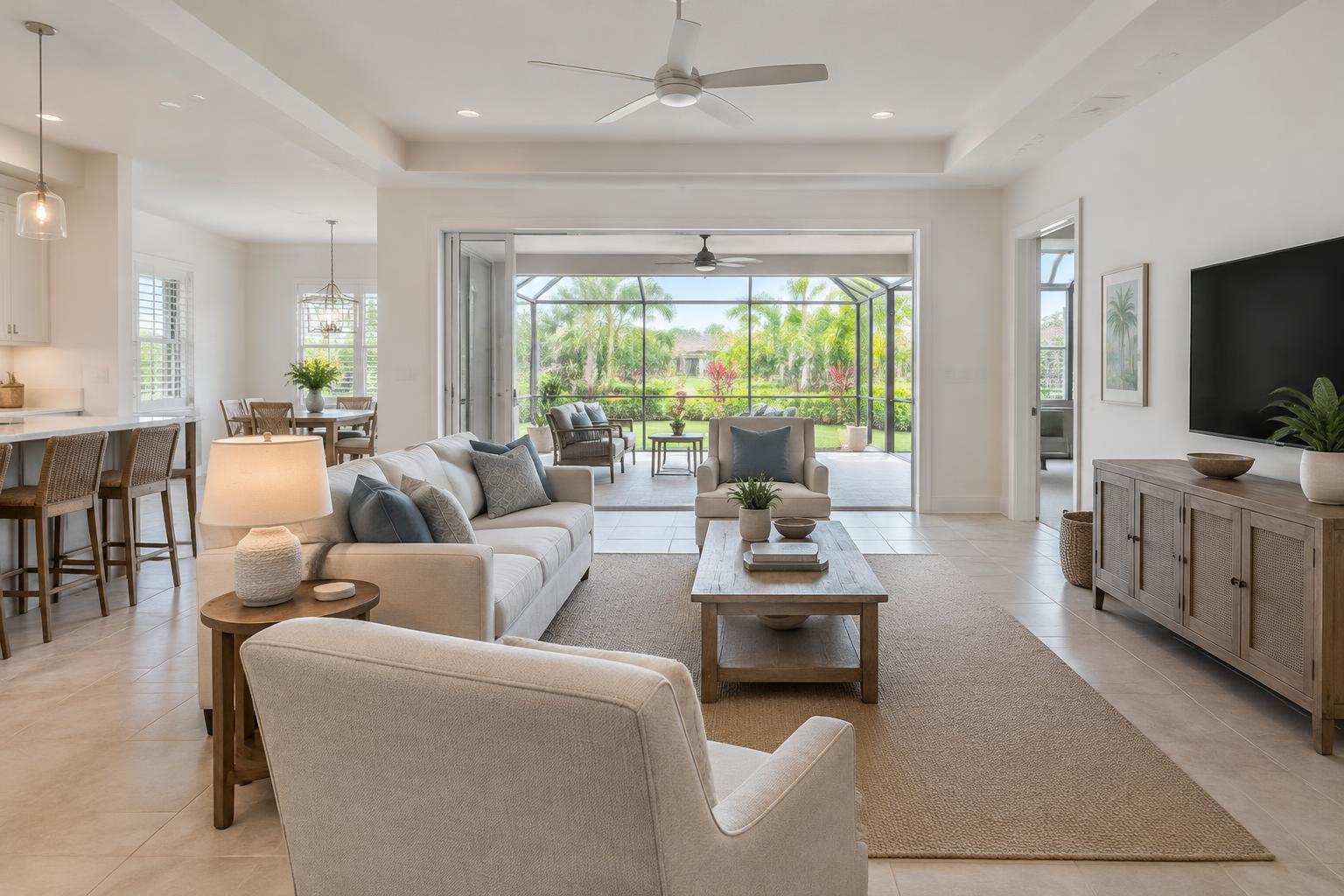
Thinking about downsizing in Southwest Florida? Start with a better question than "how little can I live with?" A Seniors Real Estate Specialist® on staying, adapting or moving.
When people tell me they're "thinking about downsizing," there is usually a small pause just before the word. It sounds like a concession. Less space, fewer rooms, a smaller version of the life they have now.
I've started using a different word, right-sizing, because it changes the question. Downsizing asks how much you can give up. Right-sizing asks what the next chapter actually needs. The answers can look very different.
A couple I worked with, relocating to Southwest Florida, didn't buy a smaller house, and they didn't buy a bigger one. They bought a duplex. Her wellness business is part of what they're building here, and the home they chose reflects the life they're planning rather than a square-footage target. I'm not suggesting a duplex is right for anyone else. I'm suggesting the question they started from is worth borrowing.
Three paths, not one
Most of the homeowners and families I talk with have only considered one option, and it's usually the most frightening one: selling the house and moving. In practice there are three paths, and each deserves a fair look.
You can stay as things are. For some homes and some households, that is the right answer, and the work is simply making sure it stays the right answer as the years go by.
You can stay with changes. This is the path people most often skip, because it doesn't feel like a decision. It might mean lighting, a bathroom that works better, flooring that is safer underfoot, or a layout adjustment so the parts of the house you use every day are the easiest to live in. The aging-in-place checklist is a good way to walk your own house with fresh eyes.
Or you can move to something that fits. That might be smaller, but it doesn't have to be. It might be lower-maintenance, or closer to family, or in a community where more of daily life is built in. The point is that it matches the chapter you're entering, not the one you're leaving.
Questions worth asking before you decide
The best planning conversations I have start with questions that have nothing to do with price. Which rooms do you actually use in a typical week, and which have become storage? What does the house cost you in time and attention, not only money: the yard, the pool, the roof, the insurance renewal? Who do you want nearby, and how far is that from where you live now? What do you want to be true two years from now, and five?
None of those has a right answer. They matter because they replace "should I sell?" with "what do I want my days to look like?", and that's a question people can answer with confidence. It's also where the real fear tends to surface. For many people it isn't leaving the house. It's being forced to decide in a hurry, on someone else's timeline, after something has already happened.
Why early is the whole point
A decision made in a hurry is almost never the one you'd make with time on your side. When nothing is wrong, you can compare all three paths, price the changes, talk with your family, and look at what's available without anyone watching the clock. You can also decide to stay, and know why.
That is most of what a Seniors Real Estate Specialist® does. Much of my work with homeowners and their families happens long before anyone is ready to list, and sometimes the plan is to stay exactly where they are.
Where to start
If you'd like a structured place to begin, I wrote a planning guide, Should I Stay in My Cape Coral Home or Move?, that walks through the questions families ask most. If you'd rather talk it through, reply PLAN or book a Living Well Forward planning conversation. There's no timeline, and no pressure to decide anything.
If you were designing your next chapter from scratch, what would it need?